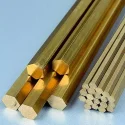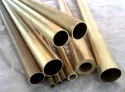
C44300 CuZn28Sn1 CZ111 Admiralty Brass Tube
Inhibited Admiralty brass tubes (C44300) are tubes made of a copper-zinc alloy with a small addition of tin and a corrosion inhibitor, engineered for outstanding resistance to polluted or saline water. With over 70% copper content, they offer a strong combination of durability, thermal conductivity, and anti-corrosive performance in heat transfer systems, as detailed in our in-depth guide to admiralty brass applications.
Description
Inhibited admiralty brass tubes are commonly used in steam condensers, especially those cooled with fresh, salt, or brackish water, and are trusted in industries such as power generation, oil refining, and marine engineering. The alloy withstands aggressive media, including sulfur-bearing compounds, and performs reliably under high-pressure and temperature conditions.
Applications
C44300 Admiralty brass tubes are commonly used in:
-
Steam condensers exposed to fresh, brackish, or seawater
-
Feedwater heaters in power generation plants
-
Heat exchangers in oil refineries and chemical plants
-
Cooling systems in marine and offshore environments
-
Desalination units and water treatment facilities
-
Thermal equipment operating under corrosive and polluted conditions
Key benefits
-
High corrosion resistance in contaminated water: inhibited alloy resists dezincification, pitting, and erosion in polluted and saline environments.
-
Reliable performance in aggressive media: withstands sulfur compounds and organic contaminants found in oil refining and chemical processing.
-
Thermal conductivity for efficient heat exchange: maintains stable performance across temperature cycles and varying water quality.
-
Good mechanical strength and ductility: suitable for high-pressure systems and thermal cycling.
-
Long service life in industrial environments: reduces maintenance needs in harsh conditions.
-
Compliance with global standards: manufactured to meet ASTM B111 and other relevant specifications.
Technical specifications
| UNS no. | C44300 - BSI No. CZ111 ISO name CuZn28Sn1 |
| Chemical comp.(%) | Cu 70~73/ Sn 0.9~ 1.2 / Pb 0.07 / Fe 0.06 max / Zn rem / As 0.02 ~ 0.06 |
| ASTM spec. | B 111, B 395 |
| ASME spec. | SB 111, SB 395 |
| Applications | Heat exchangers, condensers, and cooling systems; desalination equipment. |
| Temper | 061 annealed |
Properties and metrics
| Properties * | Metric | English |
| Density | 8.53 g/cc | 0.323 lb/in3 |
| Tensile strength | 8.94 g/cm3 | 0.323 lb/in3 |
| Yield strength | 105 MPa | 15 ksi |
| CTE, linear | 20.2 10-6/℃@20-300℃ | 11.2 10-6/°℉ @70-570°℉ |
| Specific heat capacity | 0.09 cal/g-℃@20℃ | 0.09 BTU/Ib-°F @ 70°℉ |
| Thermal conductivity | 109 W/m-K@20℃ | 64 BTU/ft2/ft/h/°℉@ 70°℉ |
| Melting point | 899~938℃ | 1650~1720F |
Frequently asked questions about admiralty brass
Q1.What is admiralty brass?
Admiralty brass (C44300) is a copper-zinc-tin alloy with excellent corrosion resistance in seawater. It is commonly used in condenser and heat exchanger tubes in marine and industrial environments.
Q2.What is the difference between brass and admiralty brass?
While standard brass is primarily a copper-zinc alloy, admiralty brass includes a small amount of tin (usually 1%) to improve resistance to dezincification and corrosion in seawater applications.
Q3.What is admiralty brass used for?
Admiralty brass is used in marine condensers, heat exchangers, desalination plants, and other applications where corrosion resistance in brackish or seawater is critical.