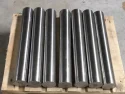
6061 Aluminum Coil
- Alloy Group: 6XXX
- Principal Alloying Element: Magnesium And Silicon
- Group: Heat Treatable Alloys
Description
Aluminum Alloy 6061 General Description:
The combination of magnesium and silicon in 6061 aluminum allows it to be heat treated to higher strength levels. It has good formability when in the fully soft, annealed condition and the strength can be significantly increased following a heat treatment.
What is 6061 Aluminum?
Originally called “Alloy 61S”, it was developed in 1935. It has good mechanical properties and exhibits good weldability. It is one of the most common alloys for general purpose use. 6061 aluminum alloy can be heat treated.
Chemical Composition Limits:
Compositions are listed as weight percent. Limits are given as a maximum unless indicated as a range.
| Si | Fe | Cu | Mn | Mg | Cr | Zn | Ti | Others-Each | Others Total | Al | |
| 6061 | 0.40-0.8 | 0.7 | 0.15-0.40 | 0.15 | 0.8-1.2 | 0.04-0.35 | 0.25 | 0.15 | 0.05 | 0.15 | Remain |
Composition according to Aluminum Association.
Typical Mechanical Properties Data Of 6061 Aluminum:
The following typical 6061 aluminum properties are not guaranteed since in most cases they are average for various sizes and methods of manufacture and may not be exactly representative of any particular product or size. The data is intended for comparing alloys and tempers and should not be used for design purposes.
Source: Aluminum Standards & Data and United Aluminum data base
| Alloy-Temper | Tensile Strength (ksi) | Yield Strength (ksi) | Elongation (%) |
| 6061-O | 18 | 8 | 25 |
| 6061-T4 | 35 | 21 | 22 |
| 6061-T6 | 45 | 40 | 12 |
United Aluminum can supply 6061 in the annealed temper for maximum formability. The formed parts can be subsequently heat treated to higher strength.